

LongHorn: ordering, bookings and gift cards platform · Case study
Restaurants · Web platform + admin panel · Aug 2025 – Oct 2026
LongHorn has been a Peruvian steakhouse favorite for 25 years, with 13 locations. I built their own platform: ordering, reservations, gift cards and a panel their team runs without relying on anyone.
A custom public website and admin panel, built hand in hand with the LongHorn team: from moving the menu out of Excel into the catalog to training every location.
The starting point: A beloved brand, with operations spread across many hands.
LongHorn was already selling through delivery and taking reservations, and its menu lived in Excel sheets by type: dining room, bar, delivery and wine. The idea was to bring everything together on their own platform, where each location shows what it actually offers and the team can publish without waiting on a developer.
What we agreed to build
- Direct sales Their own ordering and checkout, with no middlemen.
- Menu by location Each location with its own dishes, prices and options.
- Autonomy A panel so the team can publish and operate on their own.
The experience: From craving to order, in just a few taps.
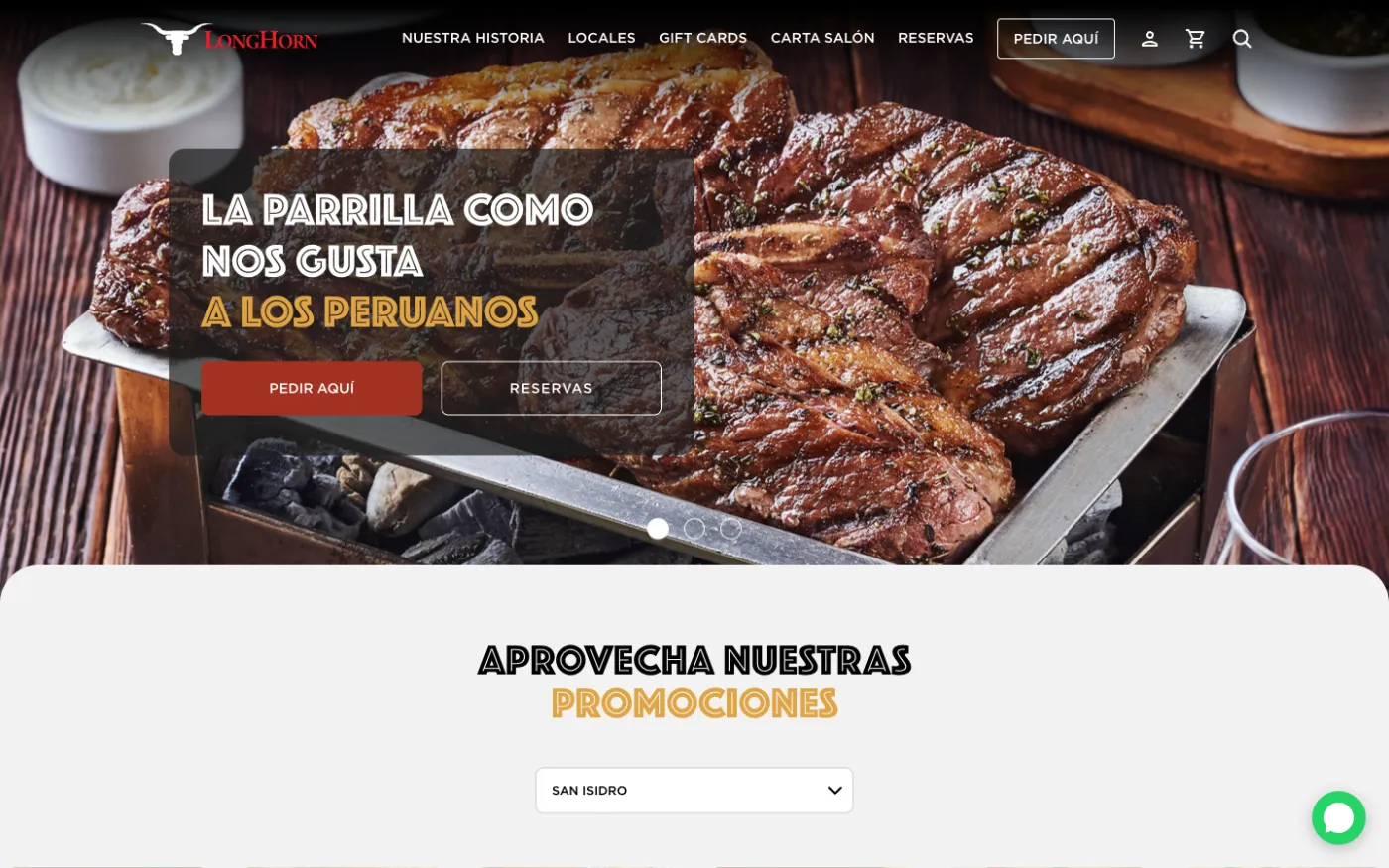
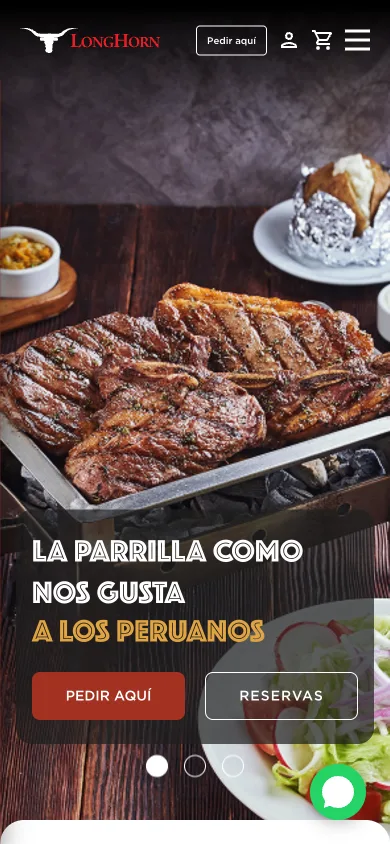
- Ordering Cart and checkout as a guest or with an account, with saved addresses and order history in My Profile.
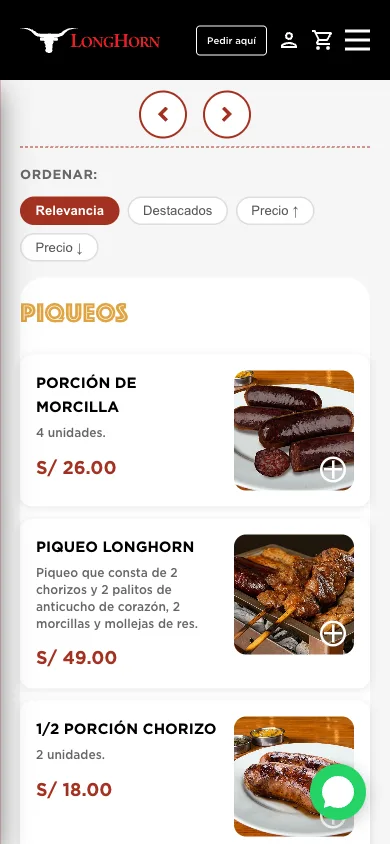
- Dining Room & Bar menus Filtered by location, with each dish’s options and sides.
- Reservations In three steps, with group bookings and per-person payment that the team configures from the panel.
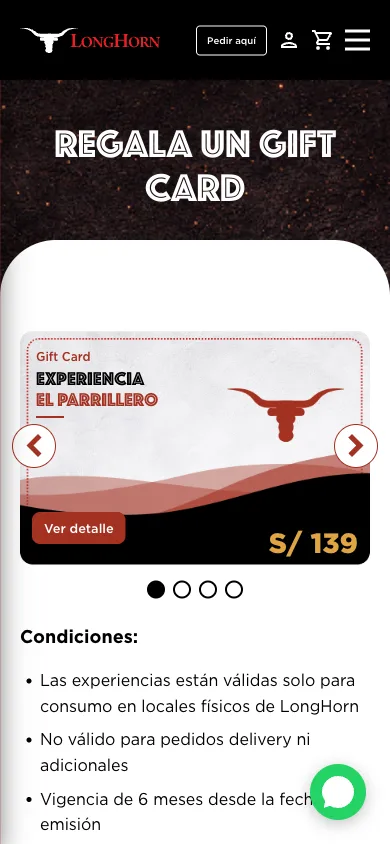
- Gift cards Online purchase, QR code and barcode, and in-store redemption with controlled expiry.
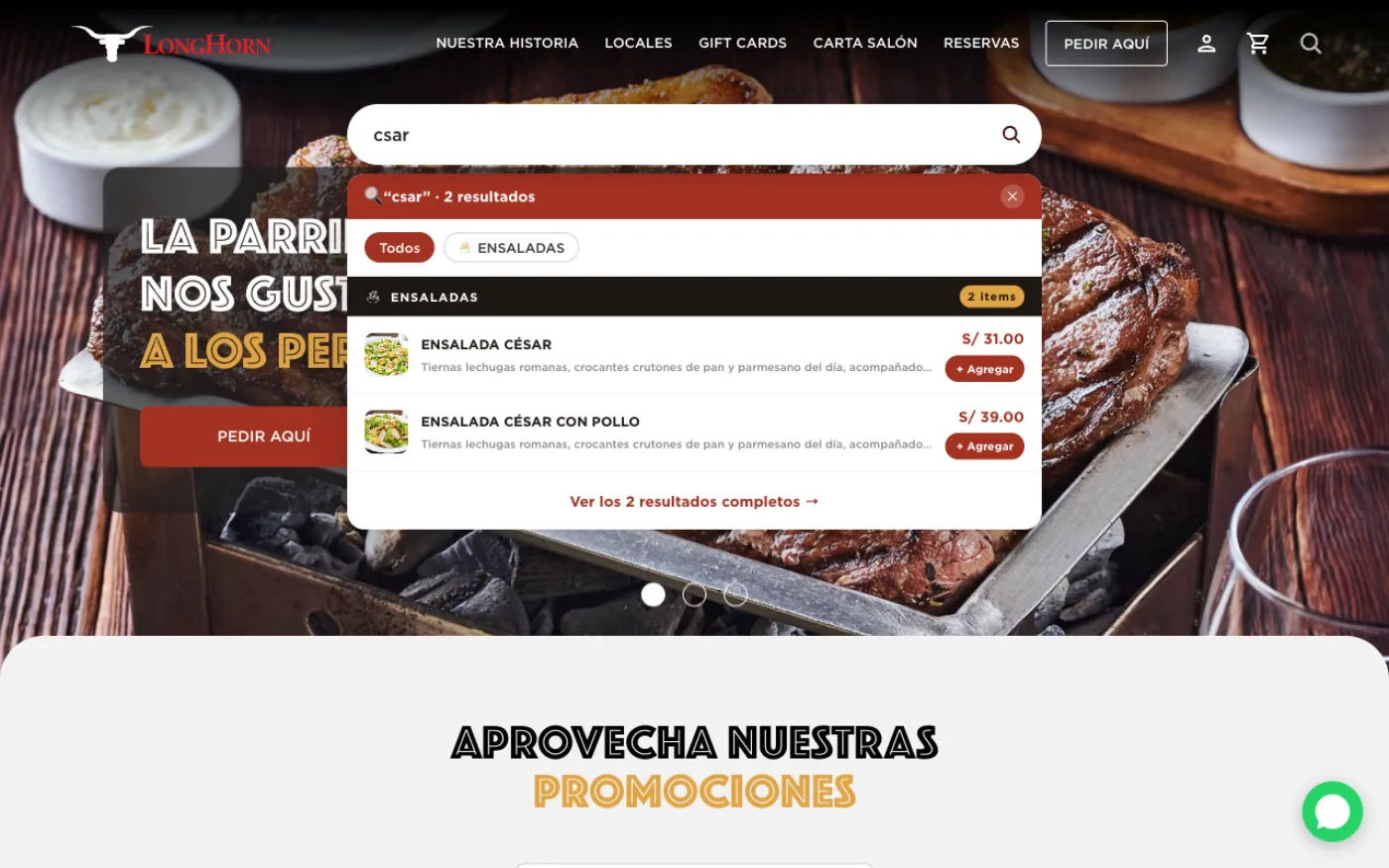
- Search Forgives typos: “csar” finds the Caesar Salad.
- Locations All 13 locations in Lima and the provinces, each with a map and its own menu.
The panel: A panel tailored to the way LongHorn works.
Content, menu, orders, reservations, customers, coupons, gift cards and customer complaints in one place, with just the right access for each person.
- What I saw: The menu lived in separate Excel sheets by type. What I did: Direct import into the catalog, with prices, options and photos per location. (4 menus — dining room, bar, delivery and wine)
- What I saw: Each location needed to manage only its own operation. What I did: Roles and permissions per location: a store coordinator sees only the sections they use. (6 roles — 20 permissions, per location)
- What I saw: Marketing wanted to update the site without waiting on development. What I did: Editable content per page, with an editor, images and drag-and-drop ordering. (30 — sections in the panel)
Also: lead tracking by channel, measurable coupons and a log of every action taken in the panel.
The handoff: Tested, reviewed and explained.
A platform of your own only works if the team adopts it. That’s why the handoff included a point-by-point review with the client, testing and manuals.
How it was delivered
- Panel audit All 29 audited sections load with no console errors.
- Client review 20 design notes, each one checked at 4 screen widths.
- Automated tests Go tests and end-to-end flows with Playwright.
- Manuals and training A panel manual and a manual for store coordinators.
Technologies: What I built the platform with.
- Backend: Go
- Data: PostgreSQL, Redis
- Frontend: htmx
- Infra: Nginx, Docker, Cloudflare
- Services: Amazon SES, Google Maps
- Quality: Playwright
The result: Their own platform to sell, take reservations and offer gifts, run by the LongHorn team on their own.
- 13 — locations on a single platform
- 30 — sections in their own panel
- 6 — roles with per-location permissions
- 548 — commits over 14 months